Thursday, December 6, 2012

compare entrepreneurs with intrapreneurs

compare entrepreneurs with intrapreneurs…

An entrepreneur is someone who, through his or her skills and passion, creates a business and is willing to take full accountability for its success or failure. An intrapreneur, on the other hand, is someone who utilizes his or her skill, passion and innovation to manage or create something useful for someone else's business... with entrepreneurial zest. 

Though both are visionary, it is the entrepreneur who spots an opportunity in the marketplace and has the courage and zeal to turn this opportunity into a business. In contrast, however, the Intrapreneur uses his or her passion, drive and skills to manage the business or create something new and useful for the business. 

The main disparity between an entrepreneur and an intrapreneur is that an entrepreneur has the freedom to act on his or her whim; whereas, an intrapreneur may need to ask for management's approval to make certain changes in the company's processes, product design or just about any innovation he or she needs to implement. Since an intrapreneur acts on innovative impulses, this may result in conflict within the organization. It is important for organizations who are implementing intrapreneurship, to create an atmosphere of mutual respect among employees. 

When it comes to resources, the intrapreneur holds an advantage over the entrepreneur since the company's resources are readily available to him or her. Conversely, an entrepreneur has the difficult task of sourcing for funding and resources on his or her own.

So, in summary…

Intrapreneurs vs. Entrepreneurs
  • Entrepreneurs provide the spark. Intrapreneurs keep the flame going.
  • Entrepreneurs are found anywhere their vision takes them. Intrapreneurs work within the confines of an organization.
  • Entrepreneurs face many hurdles, and are sometimes ridiculed and riddled with setbacks. Intrapreneurs may sometimes have to deal with conflict within the organization.
  • Entrepreneurs may find it difficult to get resources. Intrapreneurs have their resources readily available to them.
  • Entrepreneurs may lose everything when they fail. Intrapreneurs still have a paycheck to look forward to (at least for now) if they fail.
  • Entrepreneurs know the business on a macro scale. Intrapreneurs are highly skilled and specialized.
What makes entrepreneurs and intrapreneur similar is the passion to see things through to the end and the courage to face failure.


Reference 


Greiner's Stages of Organizational Growth Model


Greiner's Stages of Organizational Growth Model.


·         Stage 1: Concept/test

Before a business is launched, it undergoes some form of conception and planning. This may involve a

market test or running the business as a part-time operation, before the owner places complete

dependence on it. Creative thinking, information gathering and networking are key activities in this stage.


·         Stage 2: Development/abort stage

The business is launched and either develops to a viable size, or it is aborted at an early stage. This

will depend critically on whether sufficient customers in the marketplace adopt the product or service

on offer, hence marketing linked to cash flow management are often the key functional activities.

Typically an individual entrepreneur manages the enterprise in this stage largely through their own

efforts. This is a particularly vulnerable stage for a business as statistics indicate that it is the smallest

and youngest firms that have the highest rates of closure.


·         Stage 3: Growth/decline stage

Some enterprises that have developed into a viable entity in the marketplace continue their growth

quickly or, in some cases, more steadily. Such growth may place strains on the internal structure of

the enterprise. The management of internal processes and people are often the critical functions. The

one-person entrepreneurial management style may prove inadequate to fully sustain growth. A

division of managerial tasks, the recruitment of non-owner-managers and the development of a

functionally organised team are often prerequisites to take a business through this phase, without

which it may struggle and close.


·         Stage 4: Maturity

Most surviving business go through a period of stability, when growth flattens and the enterprise

matures. It may at this stage lose its simple structure of centralised decision-making, use more

sophisticated business processes and become more bureaucratic in its procedures. In other words,

it takes on some of the characteristics of a larger organisation.


·          Stage 5: Re-growth/decline

Once an enterprise has established itself in the marketplace with a competitive advantage over its

rivals, profits or external investment may be available to exploit further the successful business

model. The so-called 's-curve hypothesis' suggests that such investment may trigger a second

period of growth. Without this further period of growth, the maturity stage can turn into stagnation and

decline, as competition intensifies from existing rivals or new entrants into the market.


Big Five personality traits


  • Openness to experience – (inventive/curious vs. consistent/cautious). Appreciation for art, emotion, adventure, unusual ideas, curiosity, and variety of experience. Openness reflects the degree of intellectual curiosity, creativity and a preference for novelty and variety. Some disagreement remains about how to interpret the openness factor, which is sometimes called "intellect" rather than openness to experience.
  • Conscientiousness – (efficient/organized vs. easy-going/careless). A tendency to show self-discipline, act dutifully, and aim for achievement; planned rather than spontaneous behavior; organized, and dependable.
  • Extraversion – (outgoing/energetic vs. solitary/reserved). Energy, positive emotions, surgency, assertiveness, sociability and the tendency to seek stimulation in the company of others, and talkativeness.
  • Agreeableness – (friendly/compassionate vs. cold/unkind). A tendency to be compassionate and cooperative rather than suspicious and antagonistic towards others.
  • Neuroticism – (sensitive/nervous vs. secure/confident). The tendency to experience unpleasant emotions easily, such as anger, anxiety, depression, or vulnerability. Neuroticism also refers to the degree of emotional stability and impulse control, and is sometimes referred by its low pole – "emotional stability".

Saturday, September 29, 2012

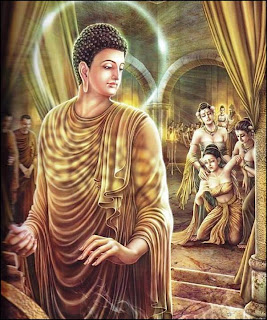
Life of lord Buddha in pictures

The Life of Lord Buddha - The Founder of Buddhism


Tuesday, September 25, 2012

SNMP Community String

Definition for SNMP : 


Simple Network Management Protocol (SNMP) is used in network management systems in order to manage your network devices. 
SNMP exposes management data in the form of variables on the managed systems, which describe the system configuration. These variables can then be queried (and sometimes set) by managing applications (in our case SysAid). 

SNMP Community Strings 

An SNMP community string is a text string that acts as a password. It is used to authenticate messages that are sent between the management station and the device (the SNMP agent). The community string is included in every packet that is transmitted between the SNMP manager and the SNMP agent. 

In order for the management station to be able to properly discover and manage devices, the following conditions need to occur: 
- The device supports SNMP and it is enabled. 
- The community string sent in the scan matches the community string on the device. - Default string for read-only is usually "public" 
- The SNMP protocol is not blocked by a firewall, in this case you can use SysAid remote discovery service and install it on your remote networks. 
- There is a read-only and a read-write mode and each has it's own community string. 

If community strings do not match, either modify the community string at the device so that it is the string that the management station expects, or modify the management station so that it uses the device's community strings. 


Note: SNMP Community strings are used only by devices which support SNMPv1 and SNMPv2c protocol. SNMPv3 uses username/password authentication, along with an encryption key.


By convention, most SNMPv1-v2c equipment ships from the factory with a read-only community string set to "public". It is standard practice for network managers to change all the community strings to customized values in the device setup.


Monday, September 3, 2012

Power Icon from the task Bar is Missing

Power Icon from the task Bar is Missing


1.     Click Start. In the Start Search field, type regedit.exe and then press Enter. If you are prompted for an administrator password or for confirmation, type the password, or click Allow.

2.     Locate and then click the following registry subkey:HKEY_CURRENT_USER\Software\Classes\Local Settings\Software\Microsoft\Windows\CurrentVersion\TrayNotify

3.     In the Details pane, click the IconStreams registry entry.

4.     On the Edit menu, click Delete, and then click Yes.

5.     In the Details pane, click the PastIconsStream registry entry.

6.     On the Edit menu, click Delete, and then click Yes.

7.     Exit Registry Editor.

8.     Restart the Explorer.exe process. To do these, follow these steps:

1.     Press CTRL+SHIFT+ESC.

2.     On the Processes tab in Task Manager, click the explorer.exe process, and then click End Process two times.

3.     On the File menu, click New Tasks (Run), type explorer, and then click OK.

4.     Exit Task Manager.

9.     Once Explorer.exe has restarted, right click on the clock and choose "Customize Notification Icons".

10.   Ensure that Power is set to "Show icon and notifications".

11.   Click on "Turn system icons on or off"

12.   Ensure that Power is set to "On".

13.   Click on OK and close the Control Panel.


http://answers.microsoft.com/en-us/windows/forum/windows_7-performance/power-icon-from-the-task-bar-is-missing/e7f180ef-81e3-40da-8703-64aced7383c7